Making margin visible in a four-store grocery chain
Four stores, no line-level margin data, and stock losses nobody could account for. We built the system that showed where the money went.
- Client
- An independent grocery chain
- Sector
- Retail
- Duration
- 11 weeks
- Year
- 2024
Margin per product line
- Before
- None
- Now
- Daily
Annual stock loss
- Before
- £13,400
- Now
- Near zero
Time counting stock
- Before
- ~9 hrs / fortnight
- Now
- ~2 hrs / fortnight
Revenue, first three months
- Before
- Baseline
- Now
- +83%
The problem
The owner ran four convenience stores and could tell you monthly revenue to the pound. He could not tell you which products made money.
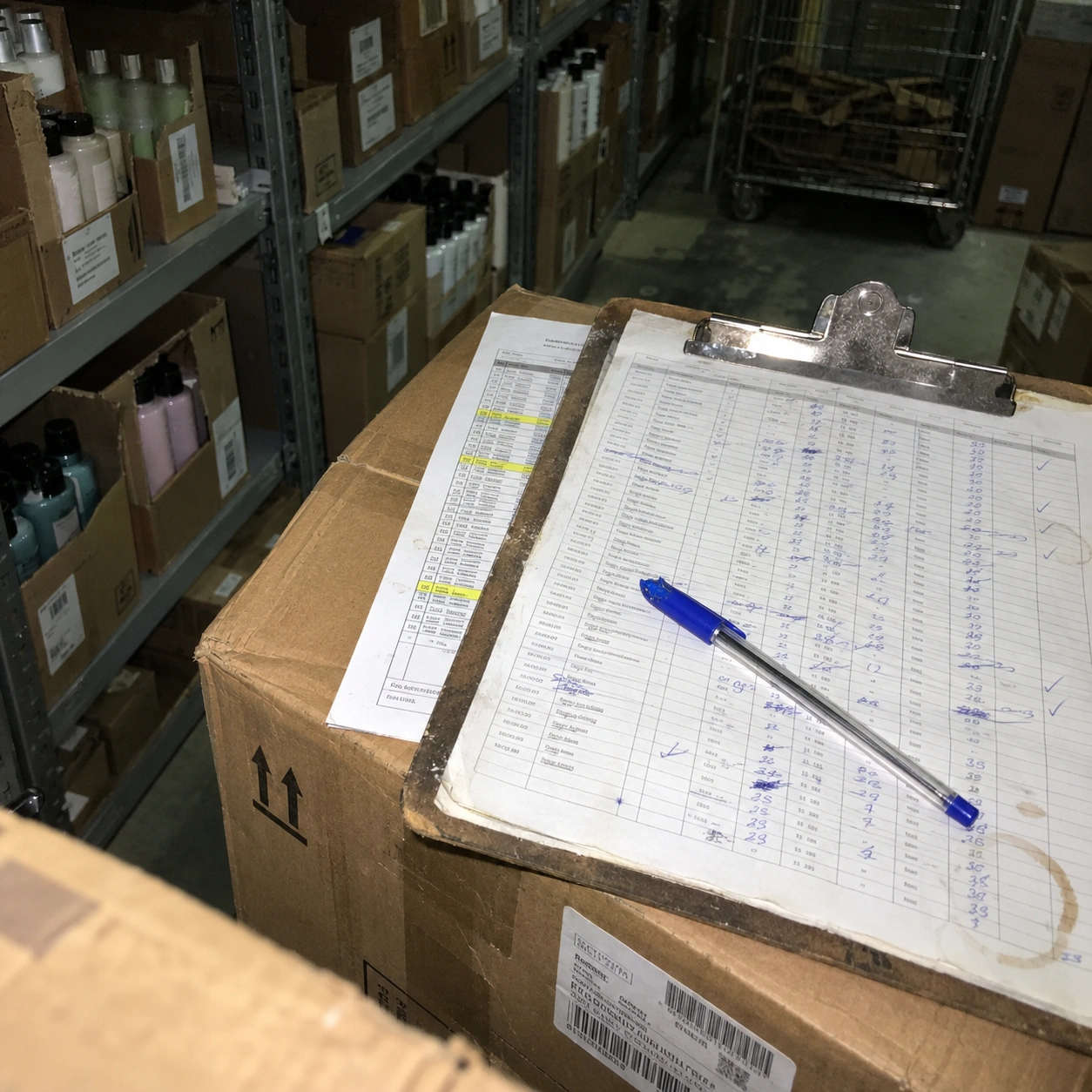
Stock was counted on paper twice a month. The counts were transcribed into a spreadsheet by a manager who had built it himself, and the spreadsheet had been copied and adapted so many times that each store used a slightly different version.
Losses were running at a little over £13,000 a year across the estate. Nobody could say whether that was theft, waste, delivery shortfalls, or counting errors, because the data could not distinguish between them.
What we found
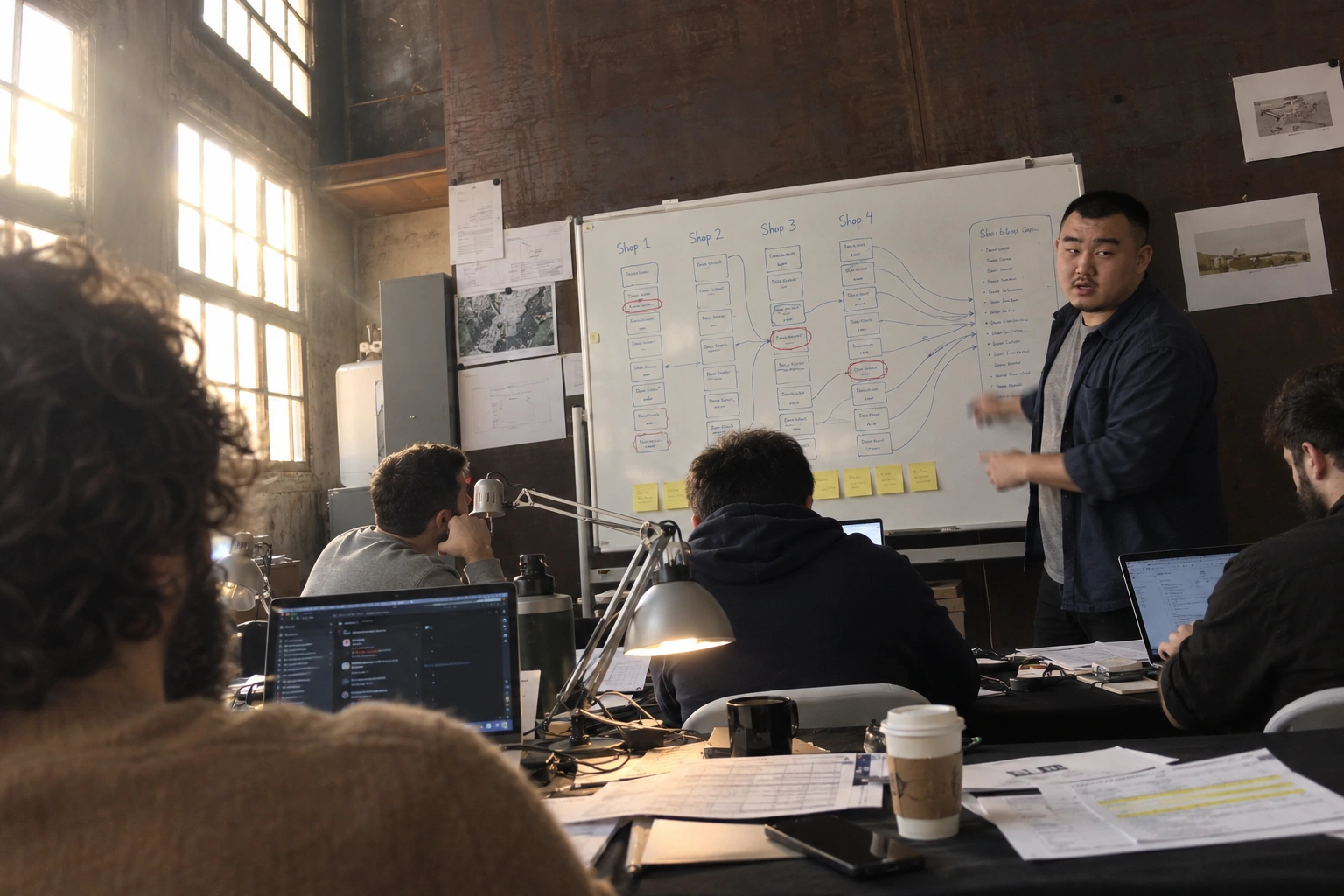
We spent a fortnight in the stores before writing anything. Two things came out of it that were not in the brief.
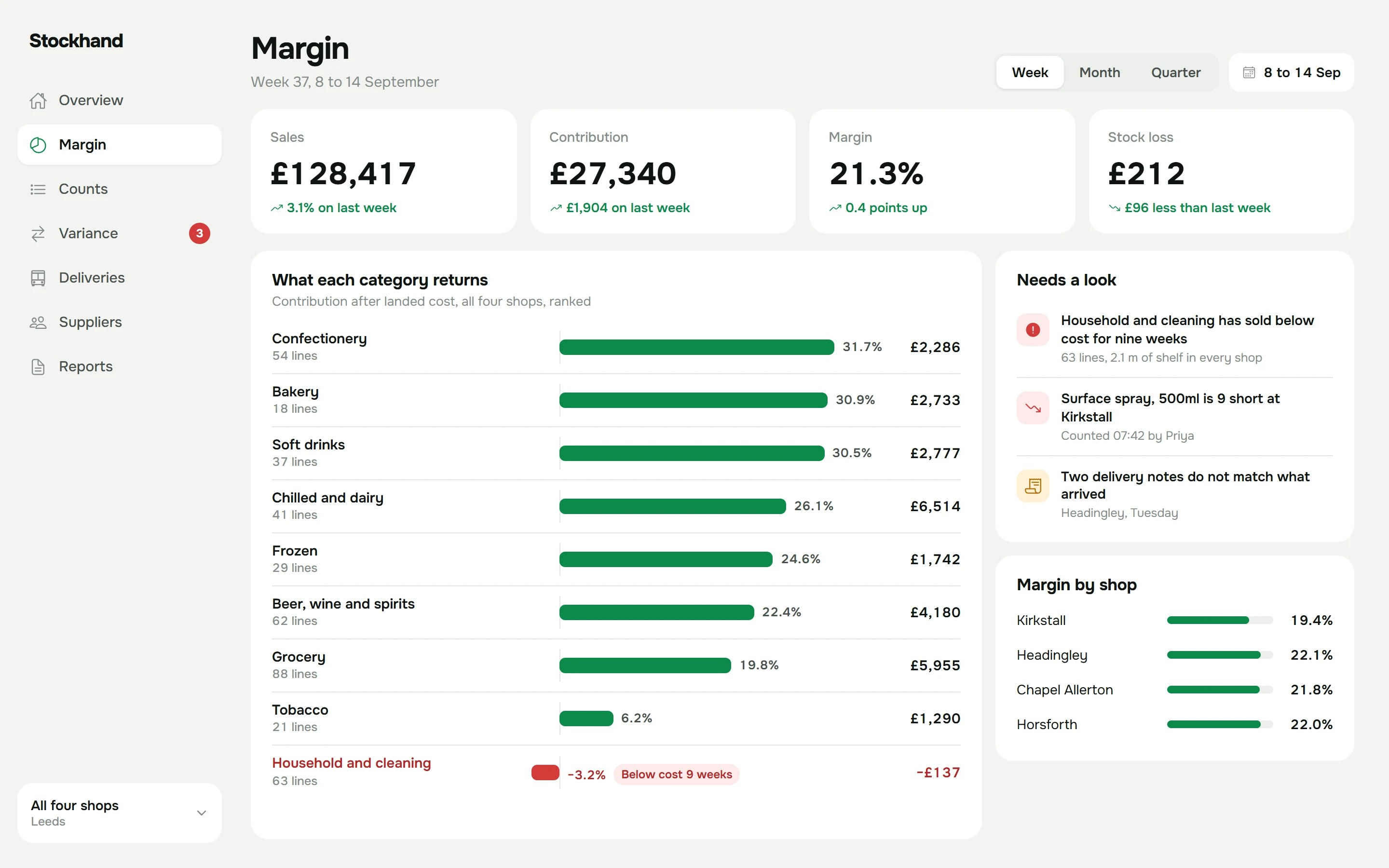
The first was that an entire aisle was losing money. It had been kept because it had always been there, and no report had ever been capable of showing its contribution separately.
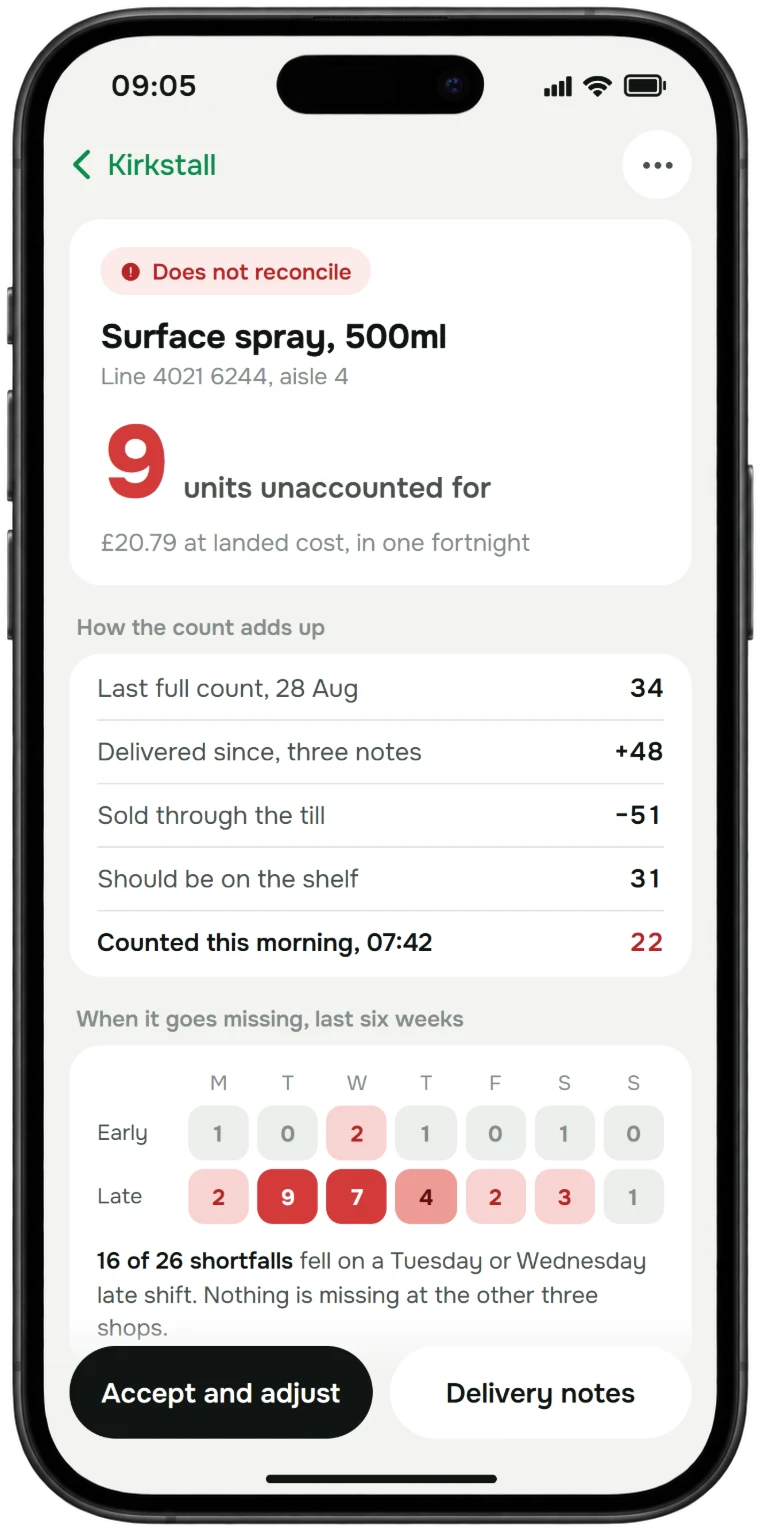
The second was that the shortfalls clustered. They appeared on particular shifts rather than evenly across the week, which meant the answer was not going to come from better counting.

How we got there
Eleven weeks, and most of the difficult part was not the software. It was getting four shops that each did things their own way to count the same thing the same way.
Four shops, four product lists
Each shop's spreadsheet named the same product differently, so nothing could be compared until there was one list. We matched every line by its barcode and put the ones that would not match in front of the owner to decide, a few at a time.
A name on every count, without slowing anyone down
Counts had to carry the name of whoever did them, but a password on a shared phone ends up written on the wall. Staff sign in once on their own phone with a four-digit code.
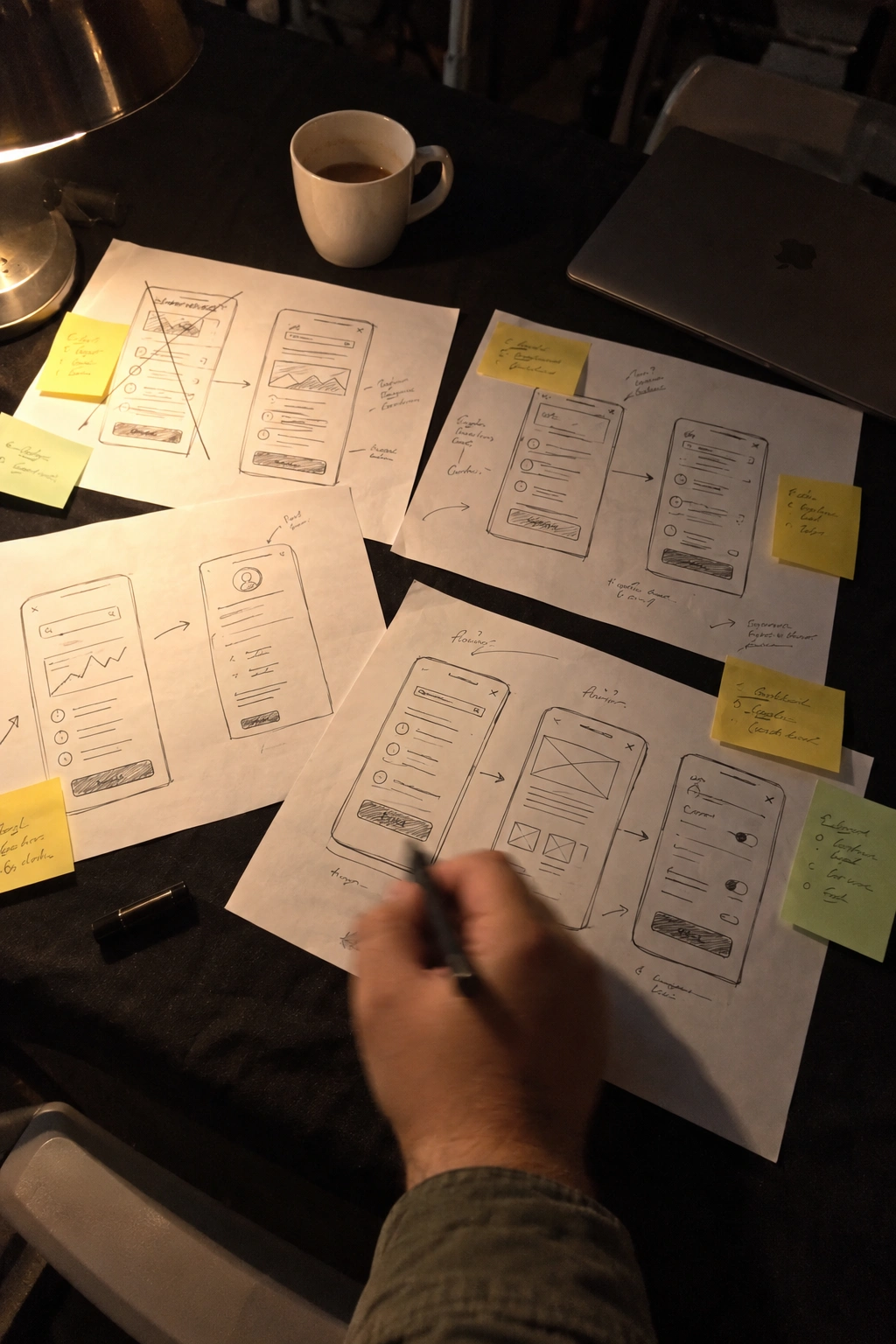
The first count screen was too slow
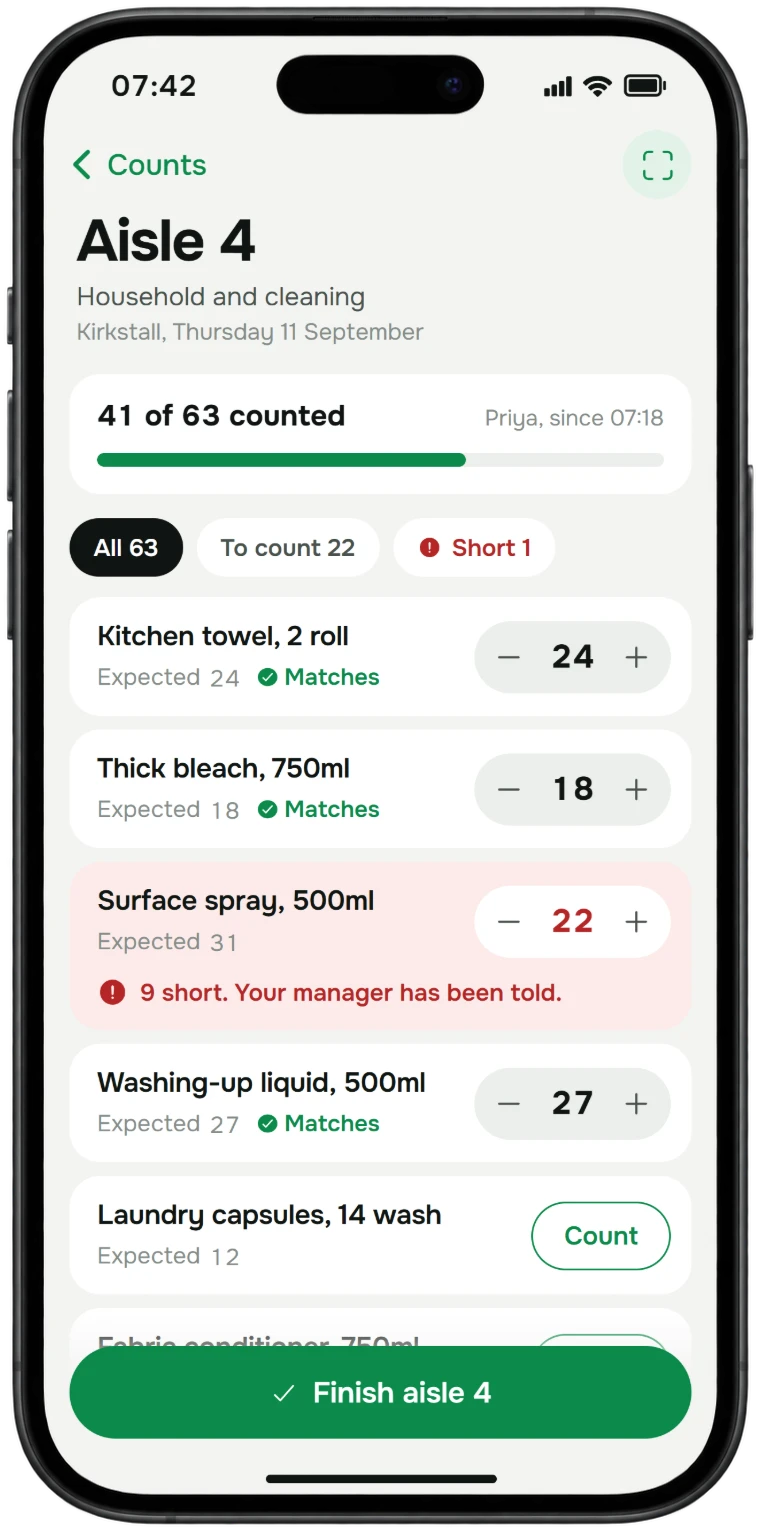
The first version asked for a typed figure on every line. On busy mornings people skipped lines to finish. The version that shipped shows the expected figure, takes one tap when it matches, and only asks for a number when it does not.
One shop first
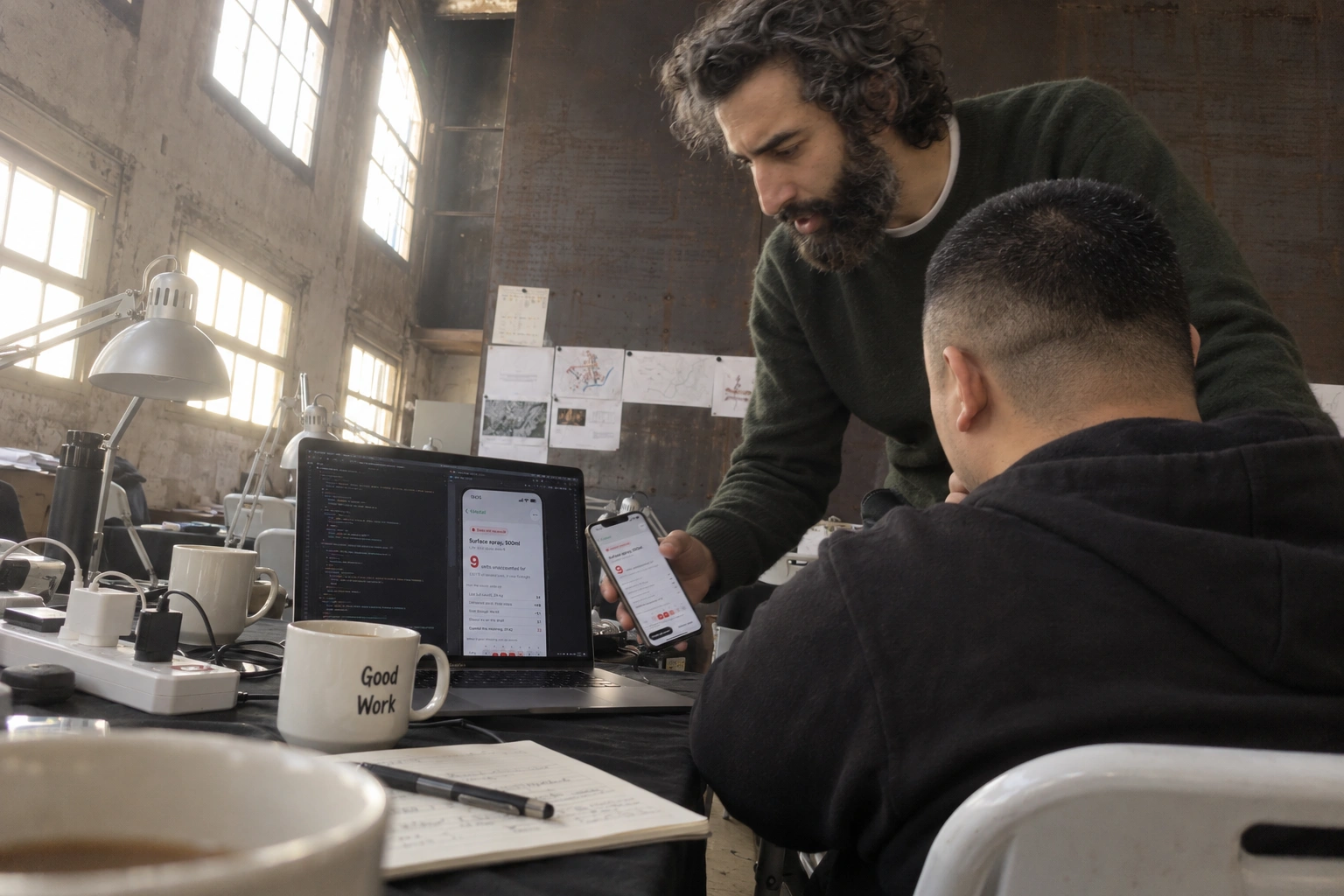
It ran in one shop alongside the paper count for two weeks before the other three moved over, so every fix came from the people doing the counting rather than from us guessing.
What we built
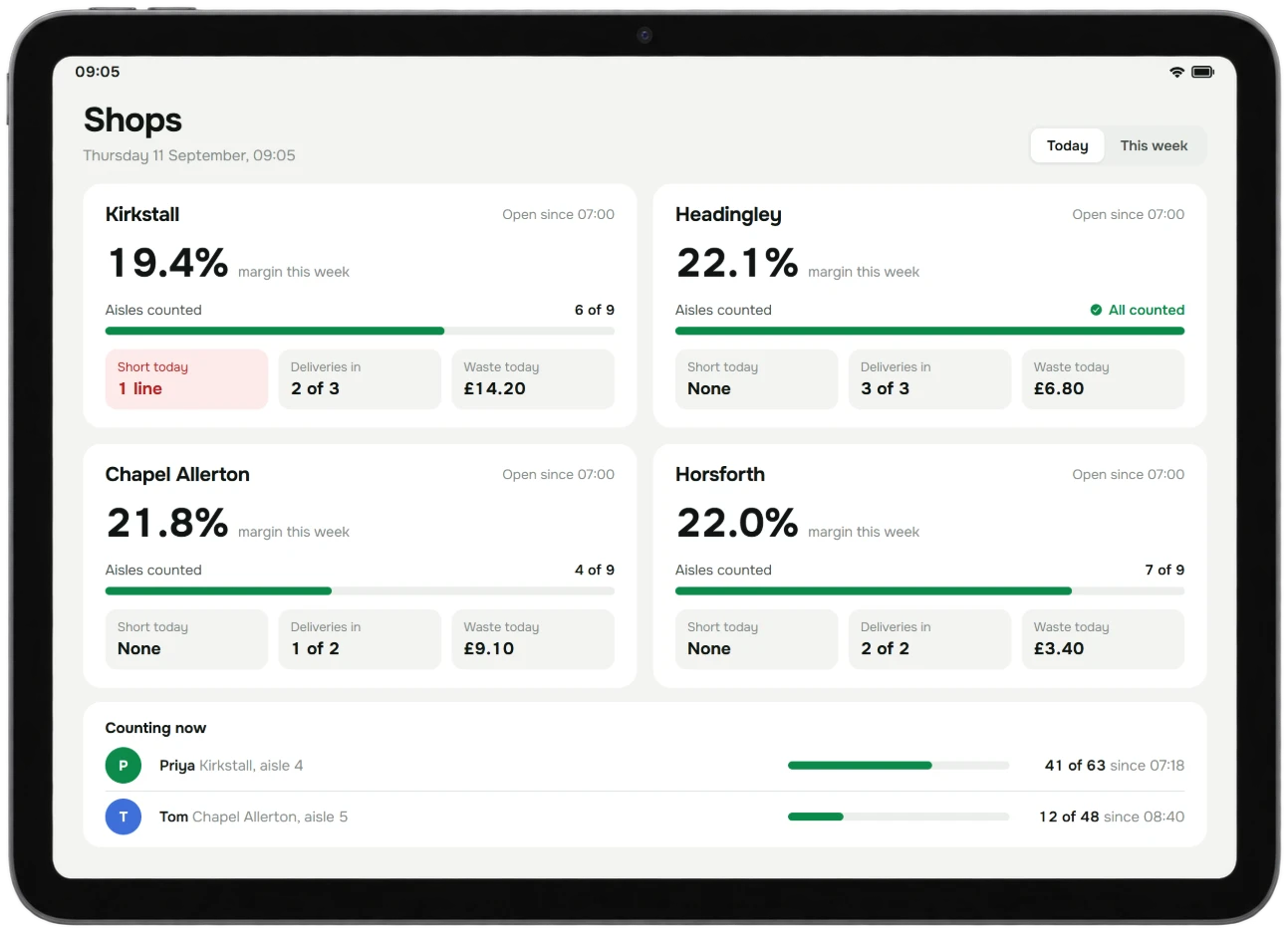
Stock counts on a phone, not on paper
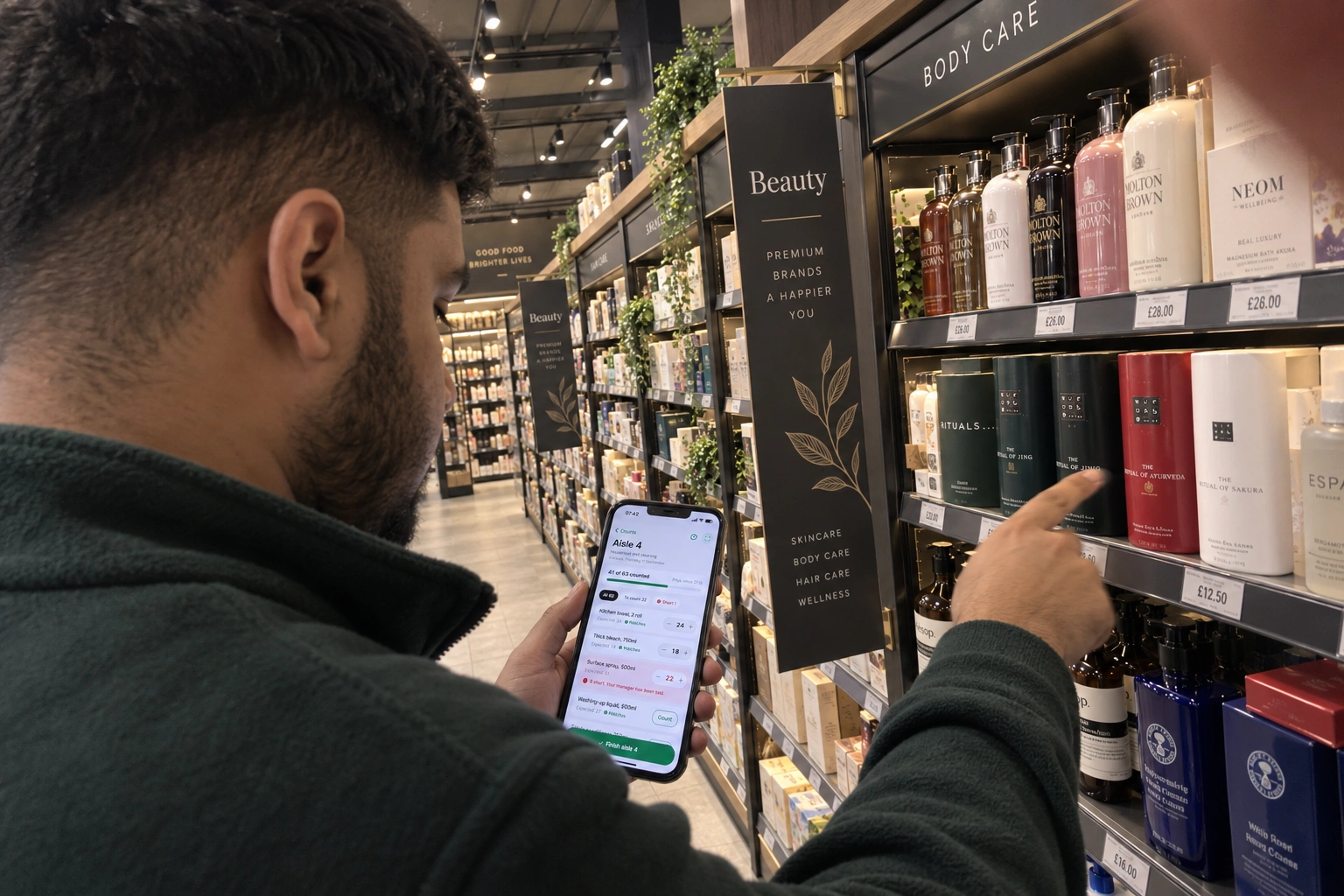
Counting moved off paper and onto whatever device staff already carried, timestamped and attributed to whoever did it. The paper step disappeared, and so did the transcription errors.
Variance flagged as it happened
Counts that did not reconcile against deliveries and sales raised an alert with the shift attached, rather than surfacing in a month-end review that nobody had time to read.
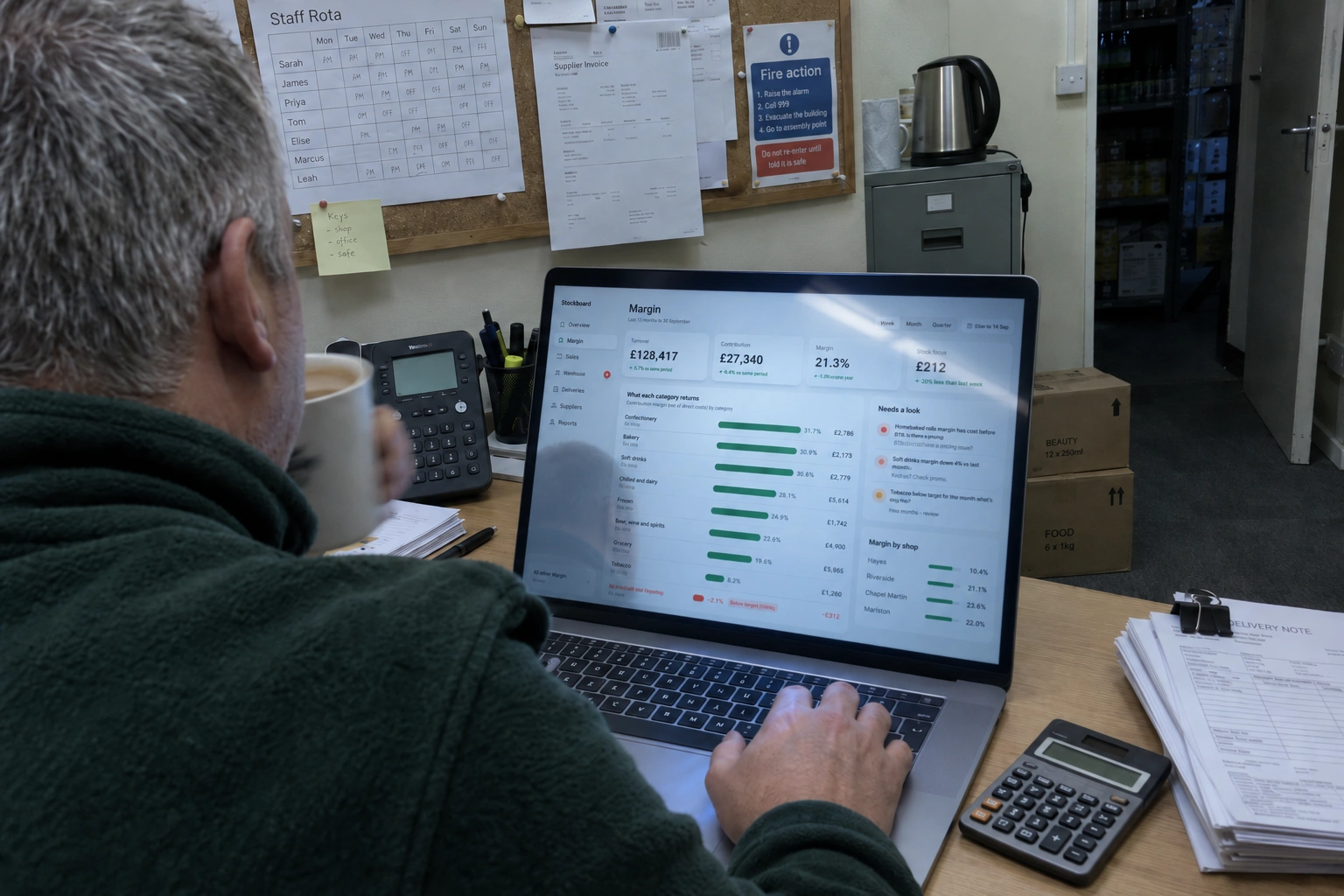
Margin per line, not per store
Every product carried its landed cost, so contribution could be read per line, per category, and per store. The dead aisle became obvious within a week.
One version, four stores
The four diverging spreadsheets became one system, so numbers from different stores could finally be compared.
Afterwards
The revenue figure needs an honest caveat: the system did not generate it. Closing the dead aisle and reallocating the space did, and the system is what made that decision possible.
The loss figure is more directly attributable. Once counts carried a name and a timestamp, the pattern in the shortfalls resolved itself within a month.
Built with
- TypeScript
- React
- Node
- Fastify
- PostgreSQL
- Prisma
- Redis
- Tailwind CSS
- Barcode scanning
- Docker
Services used
More case studies


Is this your problem too?
If any of the above sounded familiar, describe your version of it. The first conversation is about whether software is the right answer at all.
From £10,000Most projects land between £15,000 and £55,000.