Getting your systems to talk to each other
Connecting the software you already own, so the person who copies data between two screens can stop.
Most companies run more software than they can keep track of, and very little of it connects. The gap gets filled by a person with two windows open, moving fields from one into the other.
That person is your integration layer. They are expensive, they make mistakes at four on a Friday, and the knowledge leaves the building when they do.
We replace that with something that runs on its own, keeps a record of what it did, and tells somebody when it cannot.
What the work involves
Systems we connect regularly
Sage 50 and Sage 200, Xero, QuickBooks, Salesforce, HubSpot, Microsoft Dynamics 365, NetSuite, SAP Business One, Shopify, WooCommerce, Unleashed, Zoho, and whatever internal system you built in 2014.
A map before a build
We document where each piece of data actually lives and where it is duplicated. The map is often more useful than the integration, because it shows which system should own what.
Failure that surfaces
Integrations break when a supplier changes a field without telling anyone. Ours retry, log, and raise it with a person, rather than failing quietly for three weeks until the numbers stop adding up.
One source of truth per field
For every piece of data we agree which system owns it. Most integration problems are ownership problems wearing a technical costume.
Where we have done this
Wholesale and distribution
Eleven WhatsApp groups, one platform
- Monthly reconciliation
- Before
~2 daysNowContinuous
Manufacturing
A two-week compliance process, automated to hours
- Time per cycle
- Before
2 to 3 weeksNowHours
Professional services
Chasing 412 clients by email, from three offices
- Time spent chasing
- Before
~11 hrs / weekNow~2 hrs / week
Retail and e-commerce
Three systems that never agreed on a Monday
- Monday reconciliation
- Before
~7 hrsNow~20 min
Hospitality
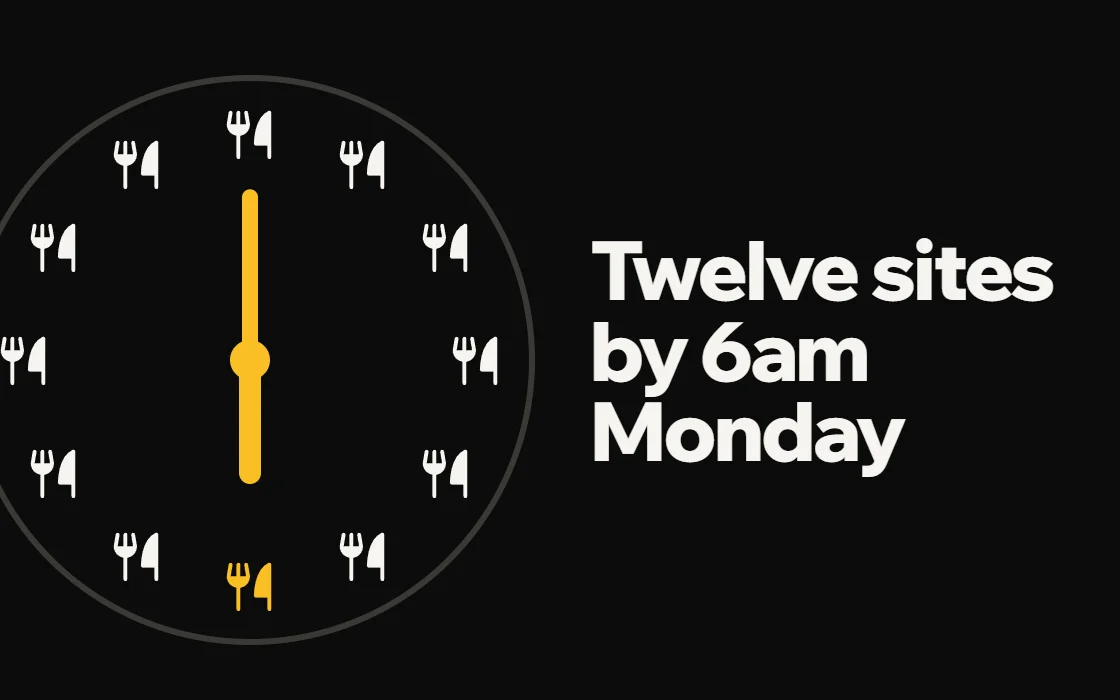
Twelve weekly spreadsheets, three weeks late
- Weekly numbers ready
- Before
~3 weeks laterNow06:00 Monday
Common questions
What if our software cannot exchange data?
If a system has no built-in way to exchange data (what vendors call an API), there is usually another route: a scheduled export, a connection straight to where the system stores its data, or files dropped into a shared folder. Sage 50 and older systems installed in your own office often work this way. We will tell you honestly if a system is genuinely closed rather than sell you a workaround that breaks.
Could Zapier or Make do this instead?
For a simple, low-volume connection, yes, and we will say so rather than quote for something you do not need. Custom work earns its cost when the logic is complicated, the volume is high, the data is sensitive, or a silent failure would cost you money.
What happens when a vendor changes their software?
Integrations are built to fail loudly and keep a log, so you find out on the day rather than at month end. On a support retainer we fix it. Without one we quote the repair.
Can you connect Sage to our CRM?
Yes, and it is one of the most common jobs we do. The work is usually less about the connection and more about agreeing which system is authoritative for a customer record, an address and a price.
Related services
Bespoke software development
Custom systems for the work no off-the-shelf product does properly, built around your process rather than around a template.
Read moreLegacy software modernisation
Replacing software that still works but is holding the business back, in stages, without a shutdown.
Read moreBespoke CRM
A CRM shaped around your pipeline, for companies whose process the mainstream products cannot represent.
Read moreTell us what is not working
Describe the process that is costing you time. If software is the wrong answer we will say so, and if a product already covers it we will name the product.
From £10,000Most projects land between £15,000 and £55,000.