Eleven WhatsApp groups, one platform
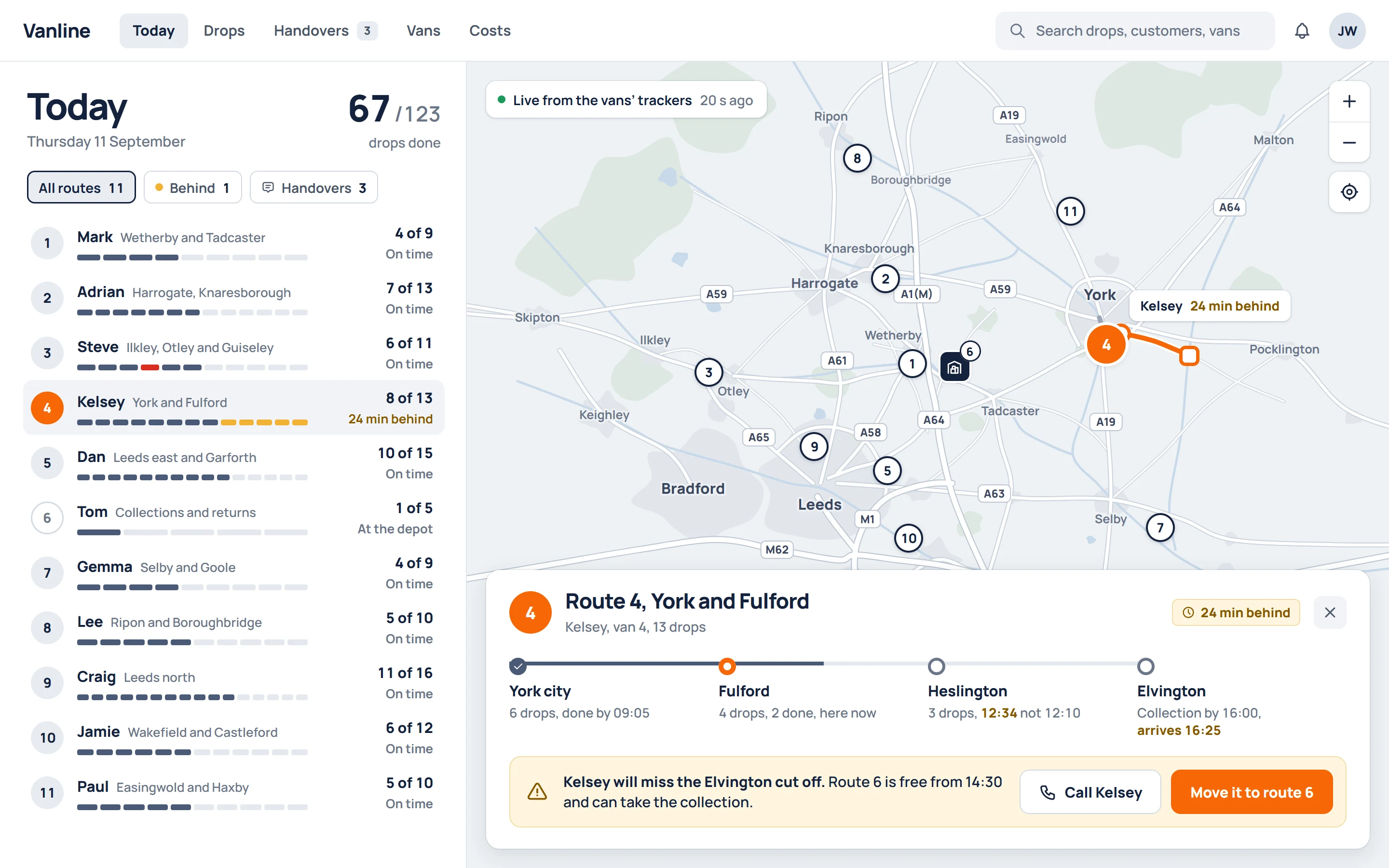
Deliveries coordinated across eleven group chats and a magnetic wall map. We replaced the lot with one screen the owner could open from his phone.
- Client
- A regional food wholesaler
- Sector
- Wholesale and distribution
- Duration
- 14 weeks
- Year
- 2024
Systems in use
- Before
- 11 chats, 4 sheets
- Now
- 1 platform
Vehicle tracking
- Before
- Magnets on a wall map
- Now
- Live GPS
Cost per delivery
- Before
- Not calculable
- Now
- Per route, daily
Monthly reconciliation
- Before
- ~2 days
- Now
- Continuous
The problem
The company supplied restaurants and butchers across three counties, running a fleet of vans out of one depot.
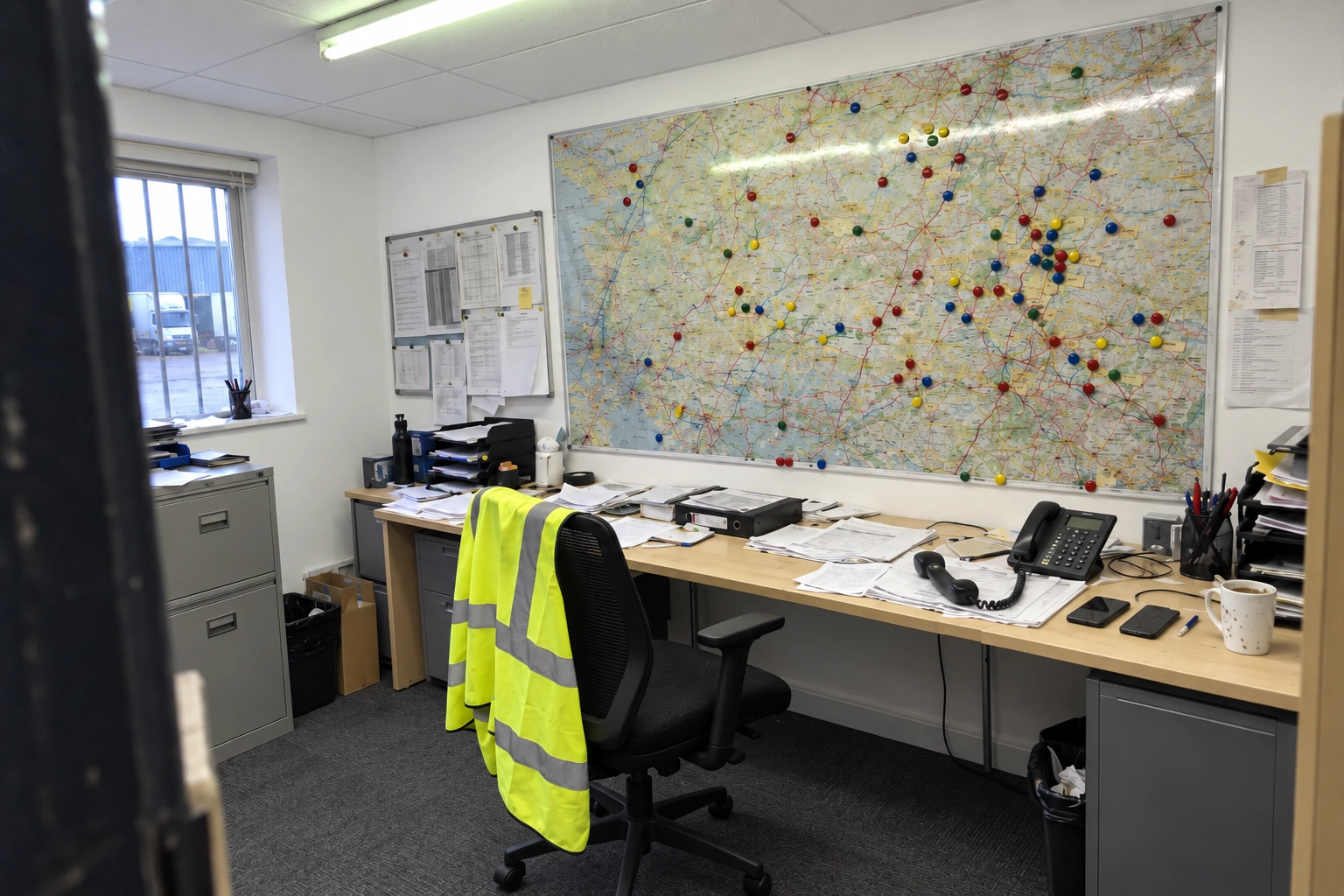
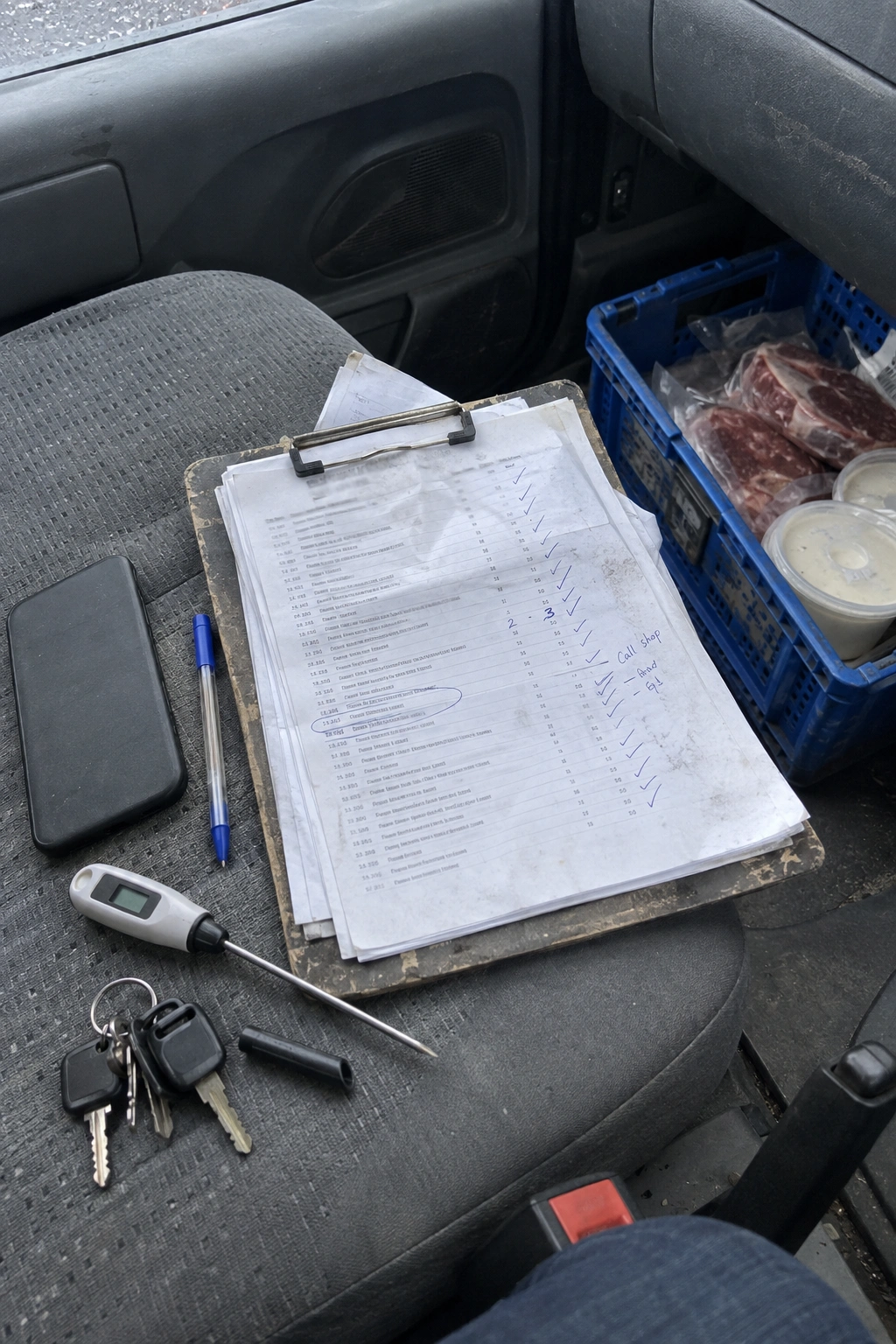
Coordination happened in eleven WhatsApp groups, one per route. Vehicle positions were tracked on a physical wall map with magnets, updated by whoever answered the phone. Expenses, deliveries and sales lived in four separate spreadsheets that were reconciled monthly, usually late.
The owner described the problem precisely: he could find out anything he wanted, but only by ringing someone.
What we found
The group chats were doing more work than anyone realised. Drivers were using them to flag problems, agree substitutions with customers, and hand jobs between each other, none of which existed anywhere else afterwards.
Replacing them with something that only tracked vehicles would have made the operation worse. The messaging had to go somewhere.
How we got there
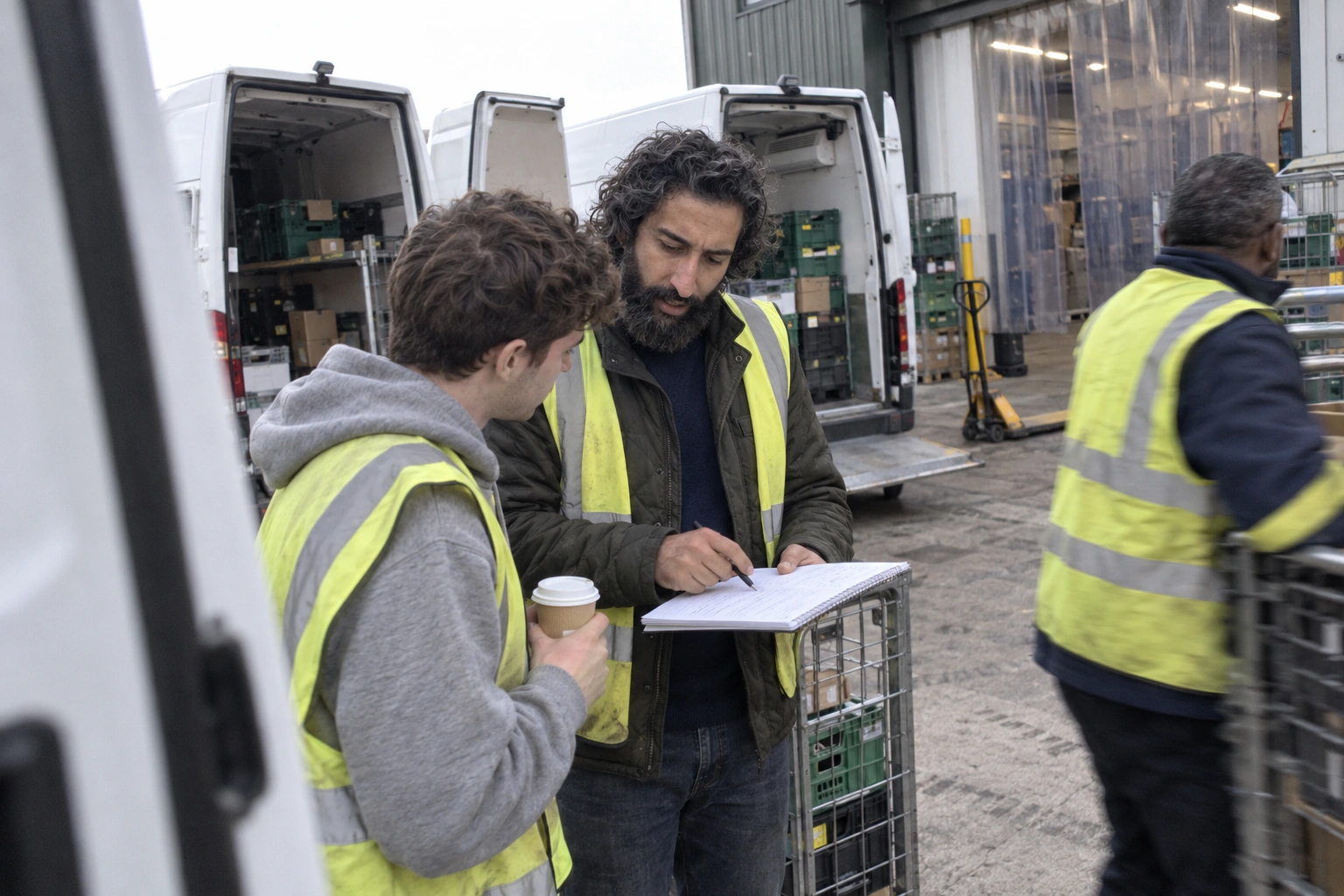
Fourteen weeks, and the vans were the easy part. Eleven chats and one man's memory were doing jobs nobody had written down, and each of those jobs needed somewhere to go before anything could be switched off.
Reading the chats before replacing them
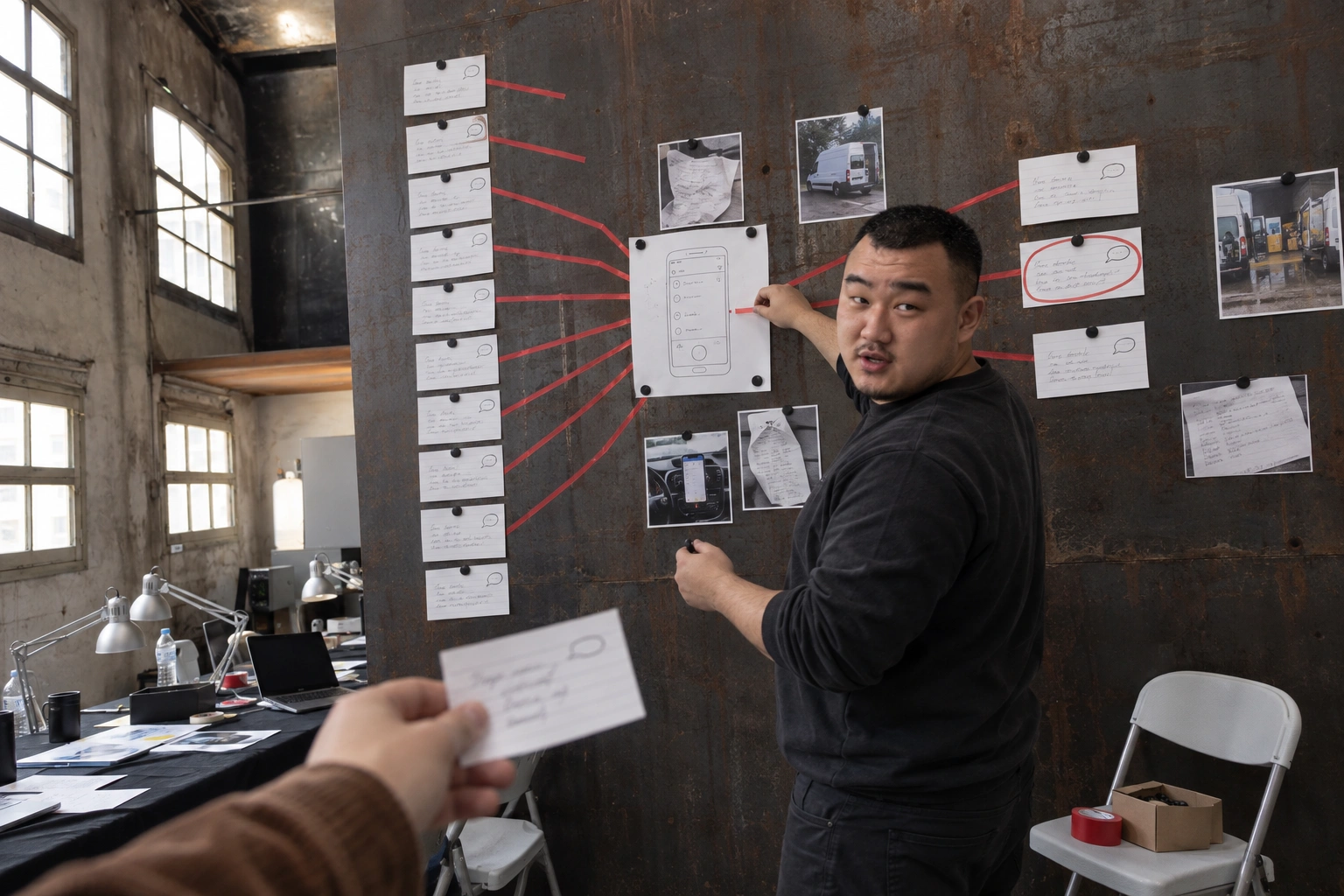
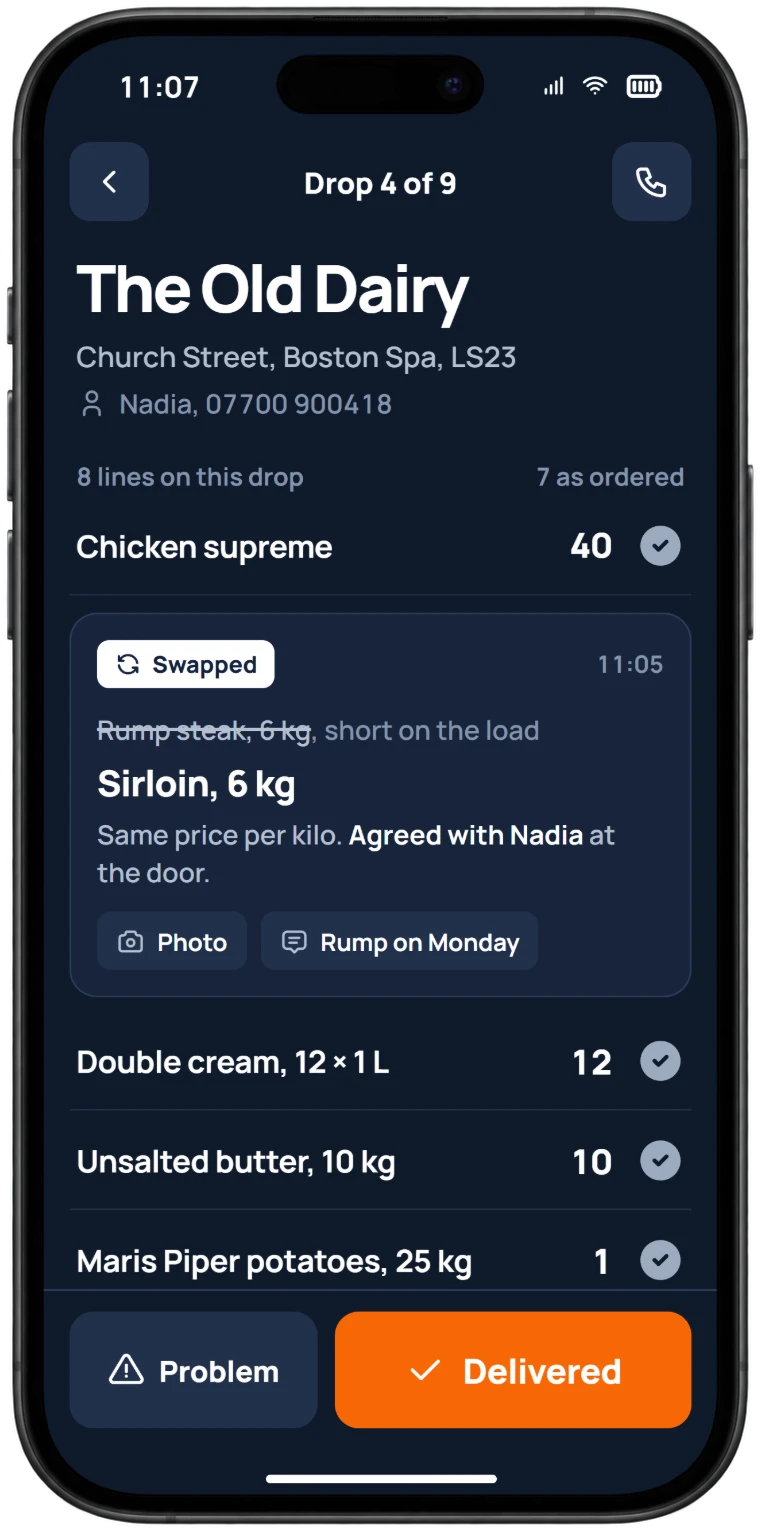
With the drivers' agreement we went back through all eleven groups and sorted the messages by what they were for. Nearly everything was one of four things: a substitution, a customer who was shut, a job passed to another driver, or a note about a customer. Each of the four got its own place on the drop, and nothing the business depends on is left in a chat.
What only the owner knew
A lot of what kept the routes working was in his head: which kitchen wants its delivery before the chef arrives, which gate to use, who will take a call at five in the morning. He sat with us for two afternoons and we wrote it down customer by customer. It now shows on the drop, where a new driver sees it without ringing him.
It had to be quicker than a message
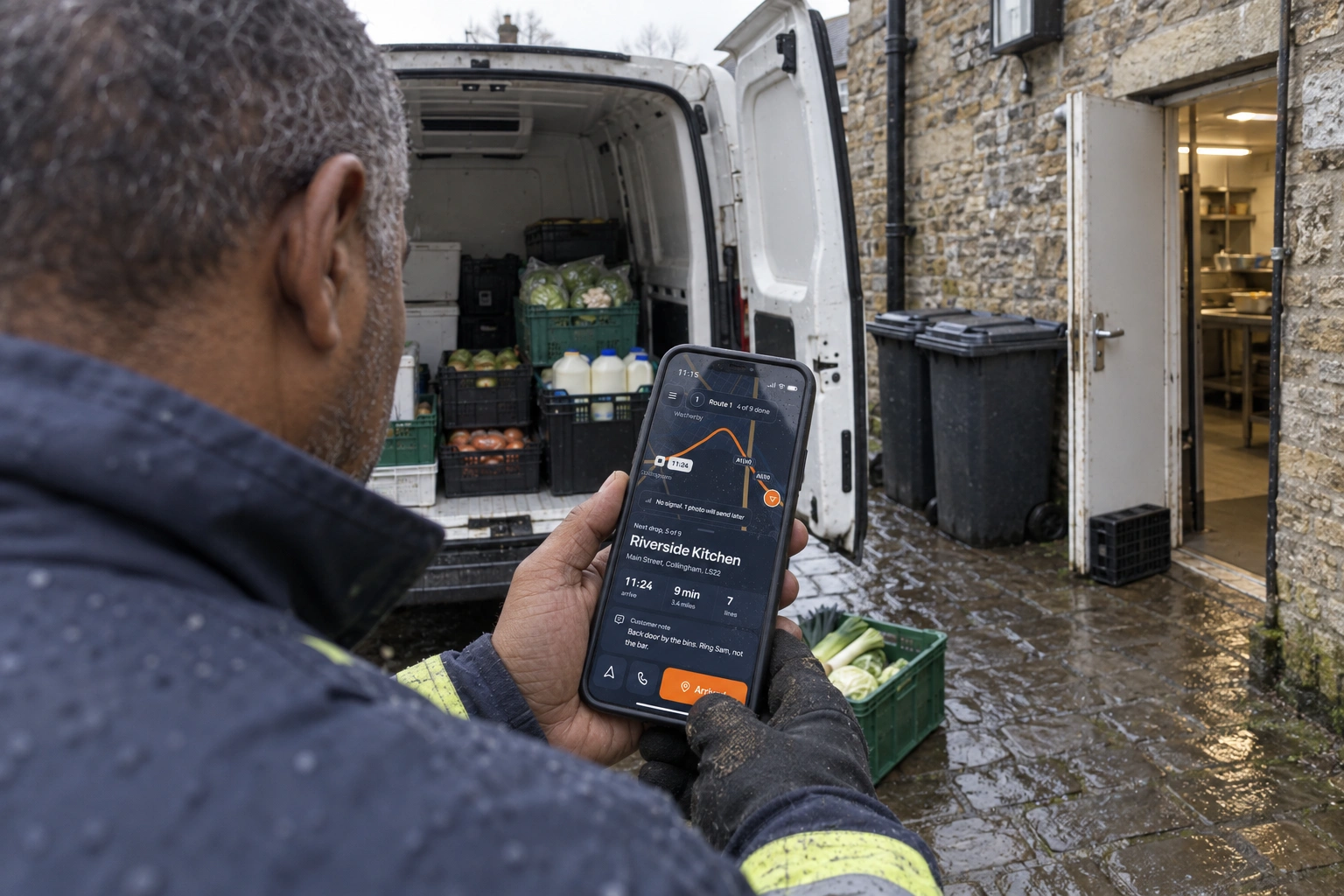
Drivers will not use anything slower than WhatsApp. In the first version, recording a substitution meant typing it out, so for a week drivers did that and messaged the desk as well. The version in use takes a photograph and two taps, and typing is there only for the driver who wants it.
Tried in a cab, in gloves
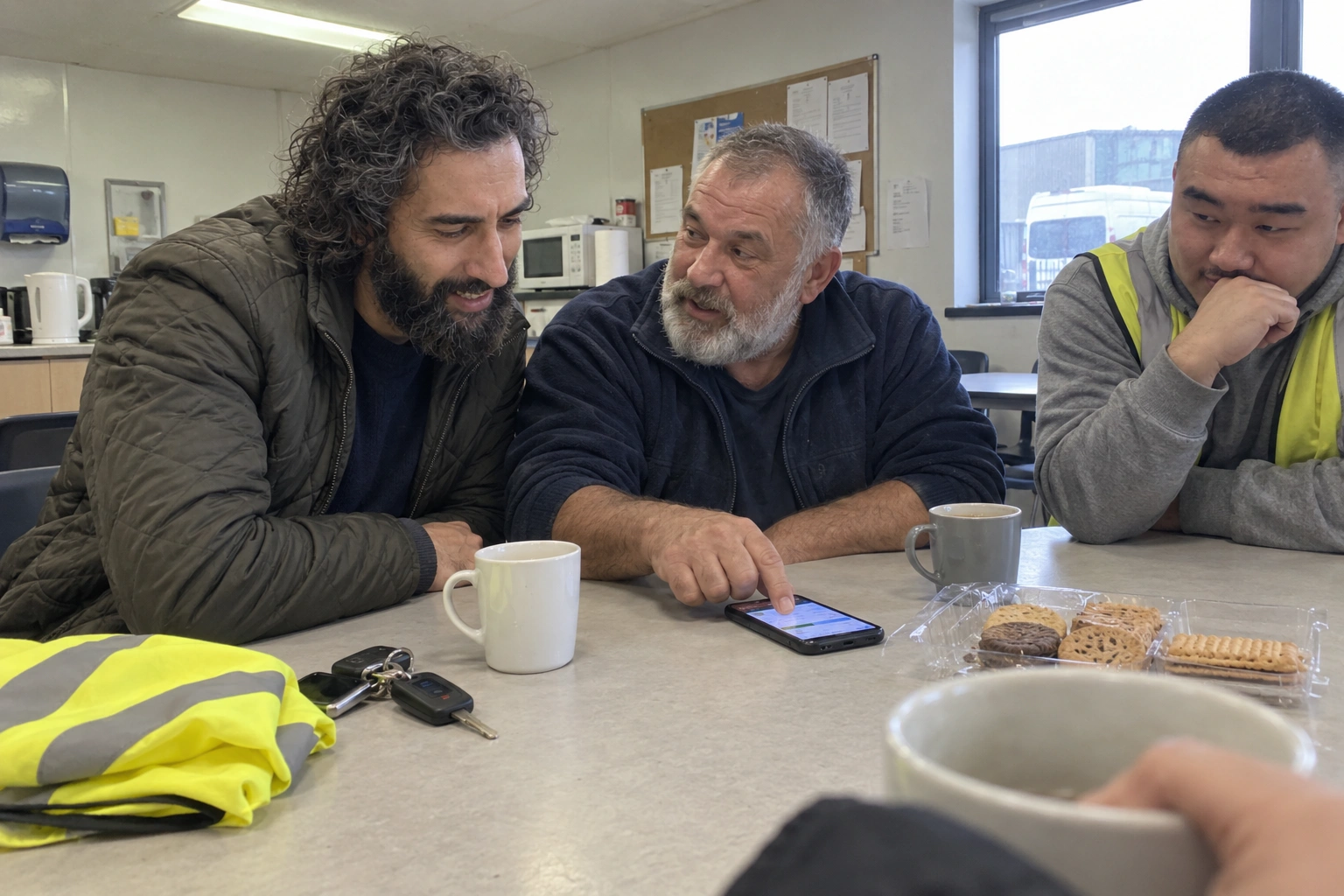
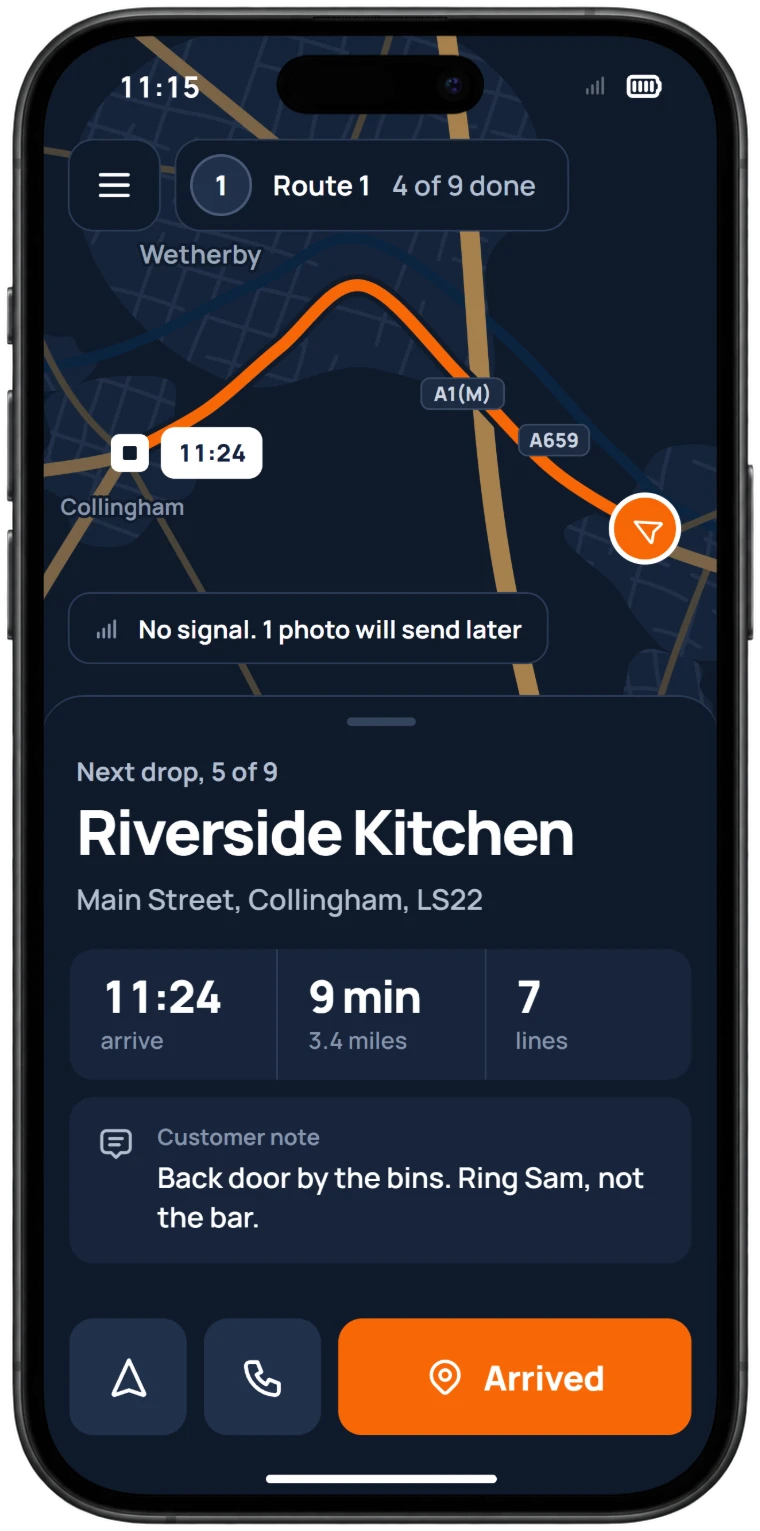
Before any driver saw the screens we tried them in a van in the yard, wearing work gloves, with the phone in its mount. The buttons grew twice. Some of the routes lose signal for miles, so whatever a driver records is kept on the phone and sent when the signal returns, and the screen says so.
What we built
One live view of the fleet, from the telematics units
Vehicle positions pulled from the telematics units already fitted to the vans, alongside delivery status per drop. The wall map came down.
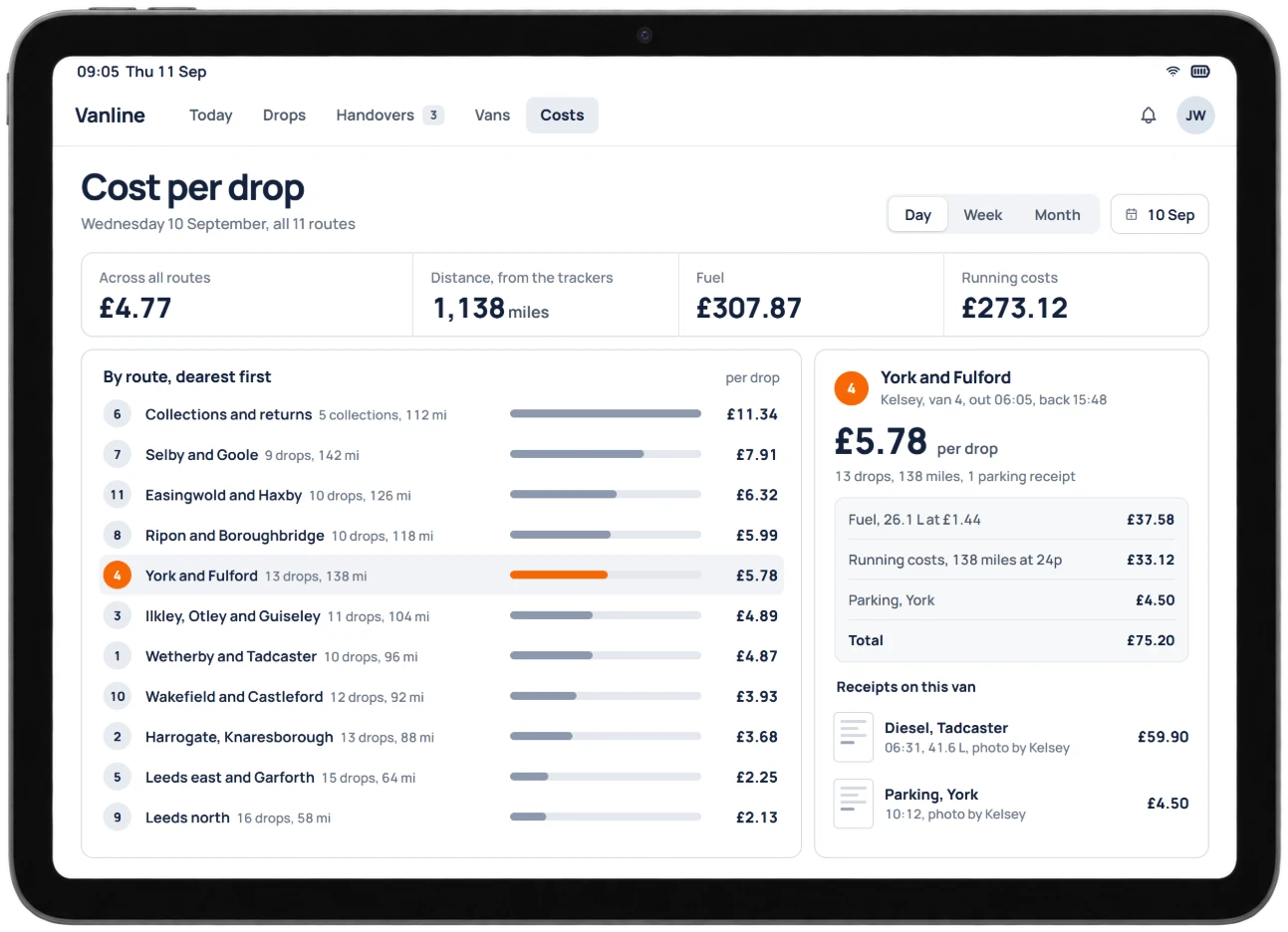
Expenses attached to journeys
Fuel and running costs recorded against the vehicle and the route, which produced a cost per delivery for the first time.
Structured handovers
Substitutions, failed deliveries and customer notes captured against the drop rather than in a chat thread, so the record survived the shift.
Built for a phone in a cab
The driver-facing screens are large-target, high-contrast, and work on a poor connection, because that is the environment they are used in.
Afterwards
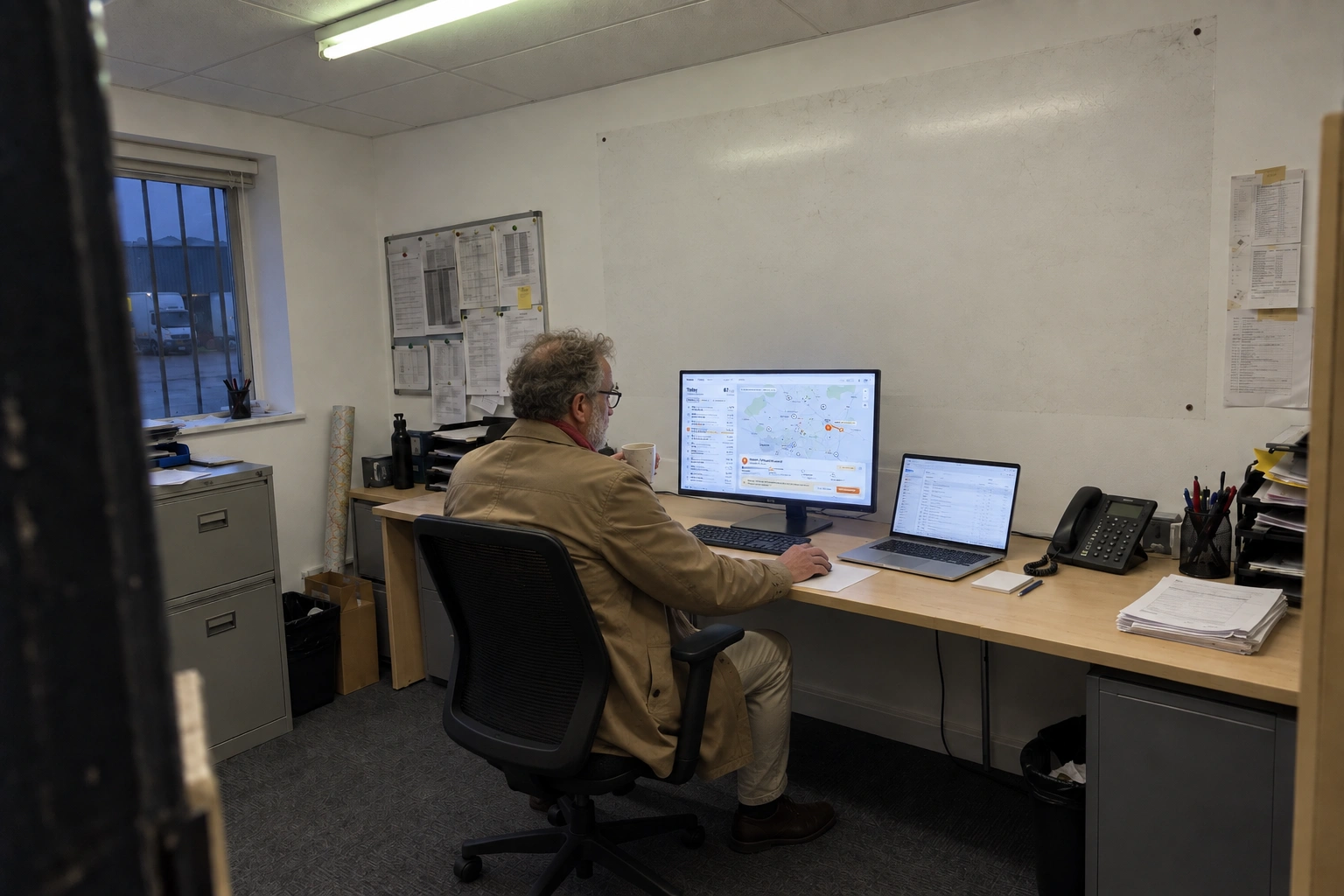
The measure the owner cared about was not in the brief. He wanted to stop being the person who knew where everything was, because it meant he could not take a day off.
Six months in, the transport desk runs without him.
Built with
- TypeScript
- React
- Node
- PostgreSQL
- PostGIS
- Redis
- WebSockets
- Webfleet telematics API
- Twilio SMS
- Docker
Services used
More case studies
Is this your problem too?
If any of the above sounded familiar, describe your version of it. The first conversation is about whether software is the right answer at all.
From £10,000Most projects land between £15,000 and £55,000.