Procurement off paper, policy intact
An entire procurement operation ran on paper and handwritten authorisations. We digitised it without changing a single internal policy.
- Client
- A construction contractor
- Sector
- Construction
- Duration
- 12 weeks
- Year
- 2025
Procurement workflow
- Before
- 100% paper
- Now
- 100% digital
Pending approvals
- Before
- None
- Now
- Live
Audit trail
- Before
- Physical filing
- Now
- Complete and searchable
Policy changes required
- Before
- None
- Now
- None
The problem
Purchase orders were raised on paper, authorised by signature, and filed in a cabinet. Anyone wanting to know the status of an order asked the person whose desk it was probably on.
Management had no view of where commitments stood or where approvals were stuck. The information existed, in a drawer, in a building.
The constraint was firm. The approval policy was not up for negotiation, so the software had to fit the process rather than the other way round.
What we found
Delays were not caused by the approvals themselves. They were caused by not knowing an approval was waiting.
A document could sit for nine days because the person holding it was on site and nobody could see that it had not moved.
How we got there
Twelve weeks. The policy could not change, which made the brief simple and the detail hard, because what people did every day was not quite what the policy said.
The policy as written, and as practised
We drew the written policy as a ladder of signatures and followed real orders up it. Some habits were not on the page: an order agreed by phone and signed days later, a deputy signing while a director was away. Each one went to the directors. What the policy already allowed was built in, and what it did not, the system does not do.
One message, where there had been ten
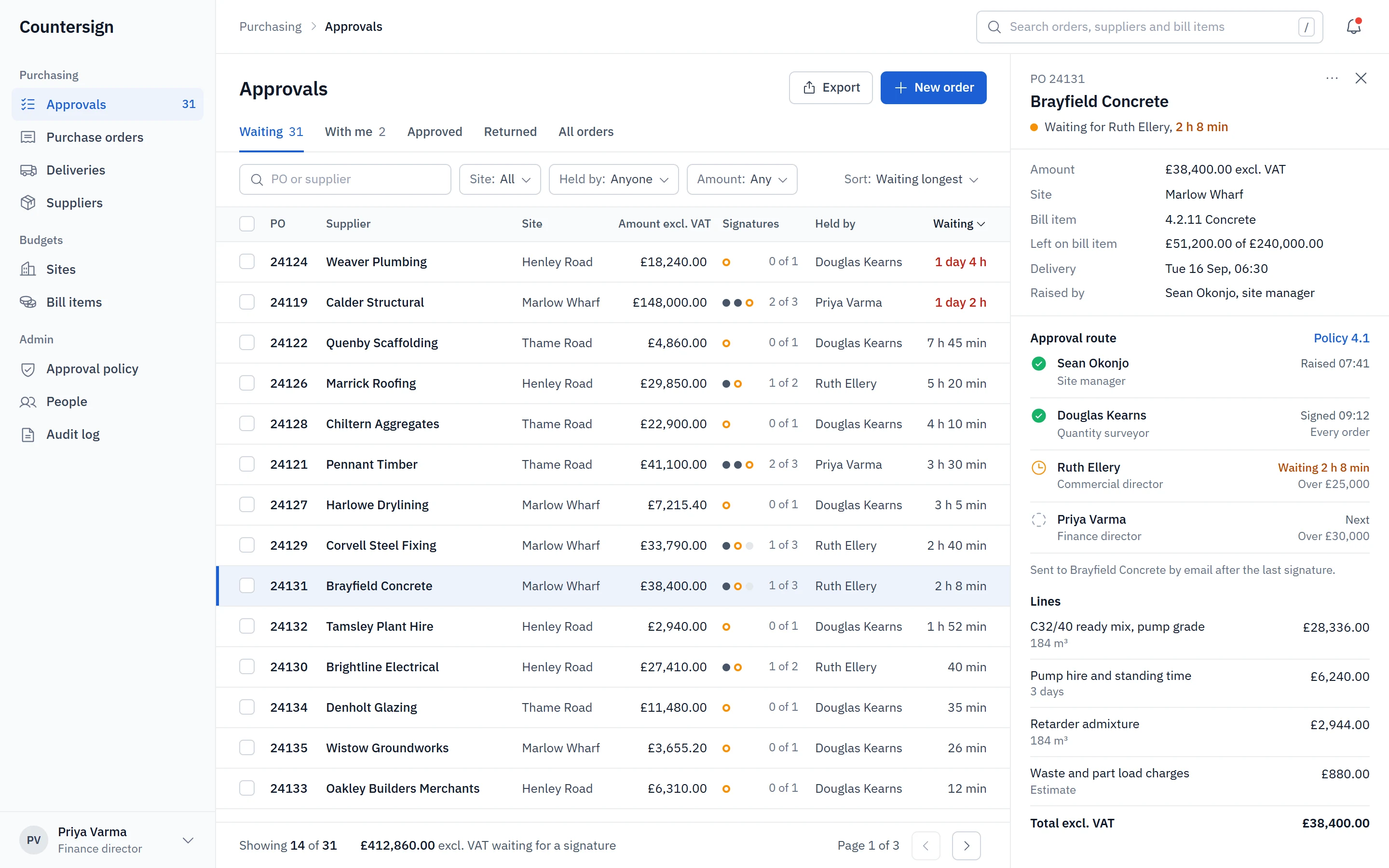
The first version sent an email at every step, and within a week nobody was reading them. Now you hear once when an order reaches you and once more if it is still with you two days later. Everything else is on the screen, where anyone can see who holds an order and for how long.
A signature that still means something
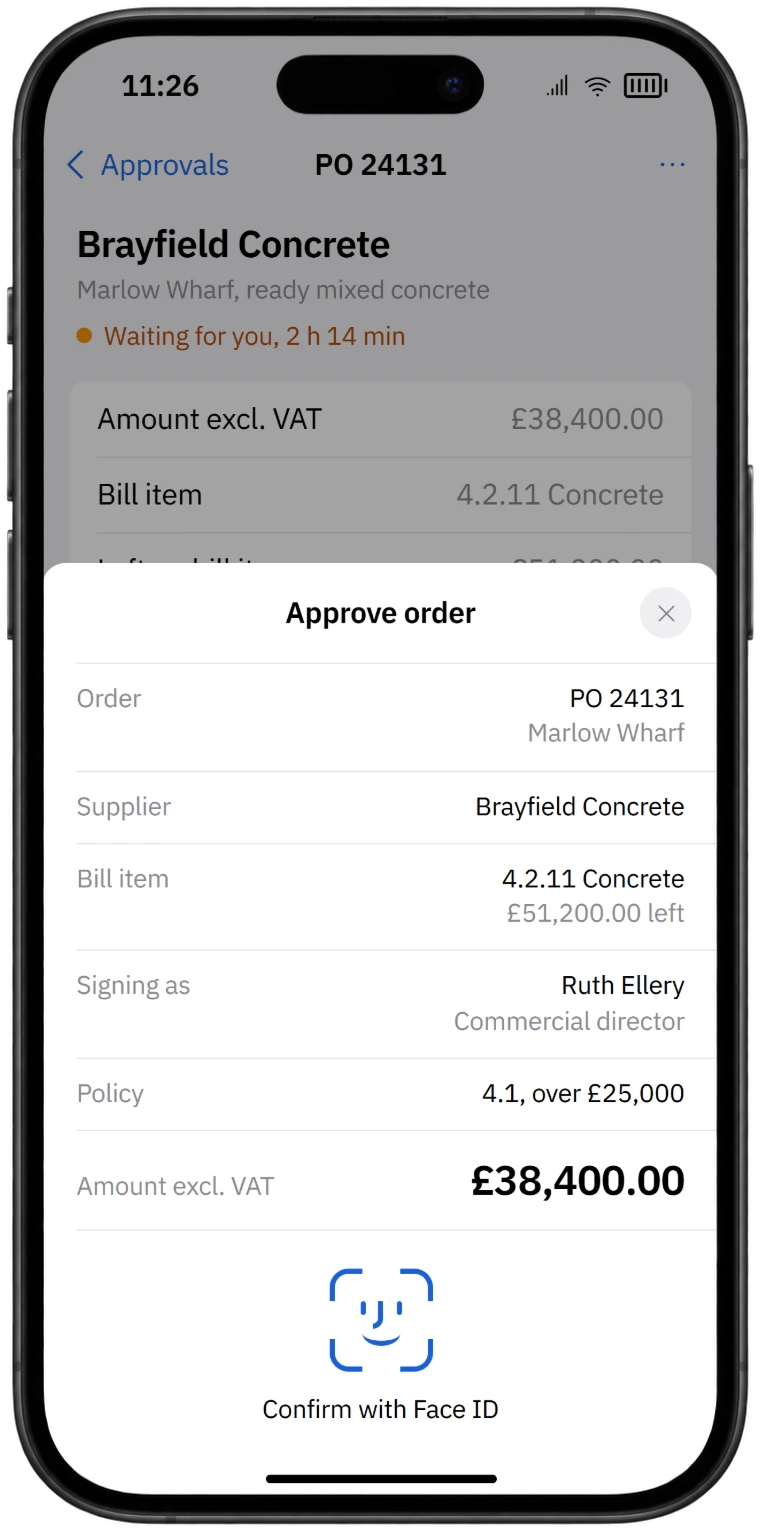
Directors were uneasy about approving a large order with a tap. The approval now shows what is being signed, what is left on that budget line afterwards and the rule that calls for their signature, and it is confirmed with the face or fingerprint check on their own phone. It takes seconds and it cannot be done by accident.
Raised on site, not at a desk
The first order form copied the paper one line by line and took too long to fill in standing on site. We took it to site for a morning and came back with a shorter one: supplier and amount first, then a choice from the bill items for that site, so nobody types a code from memory.
What we built
The existing policy, built in
Thresholds and authorisation levels set up exactly as written, so the system needed no policy change to adopt.
Visible approval chains
Every order shows who holds it and how long they have held it. Most of the delay disappeared once that was visible.
Signing from anywhere
Authorisation from a phone on site, which removed the requirement to be at a specific desk.
A complete record
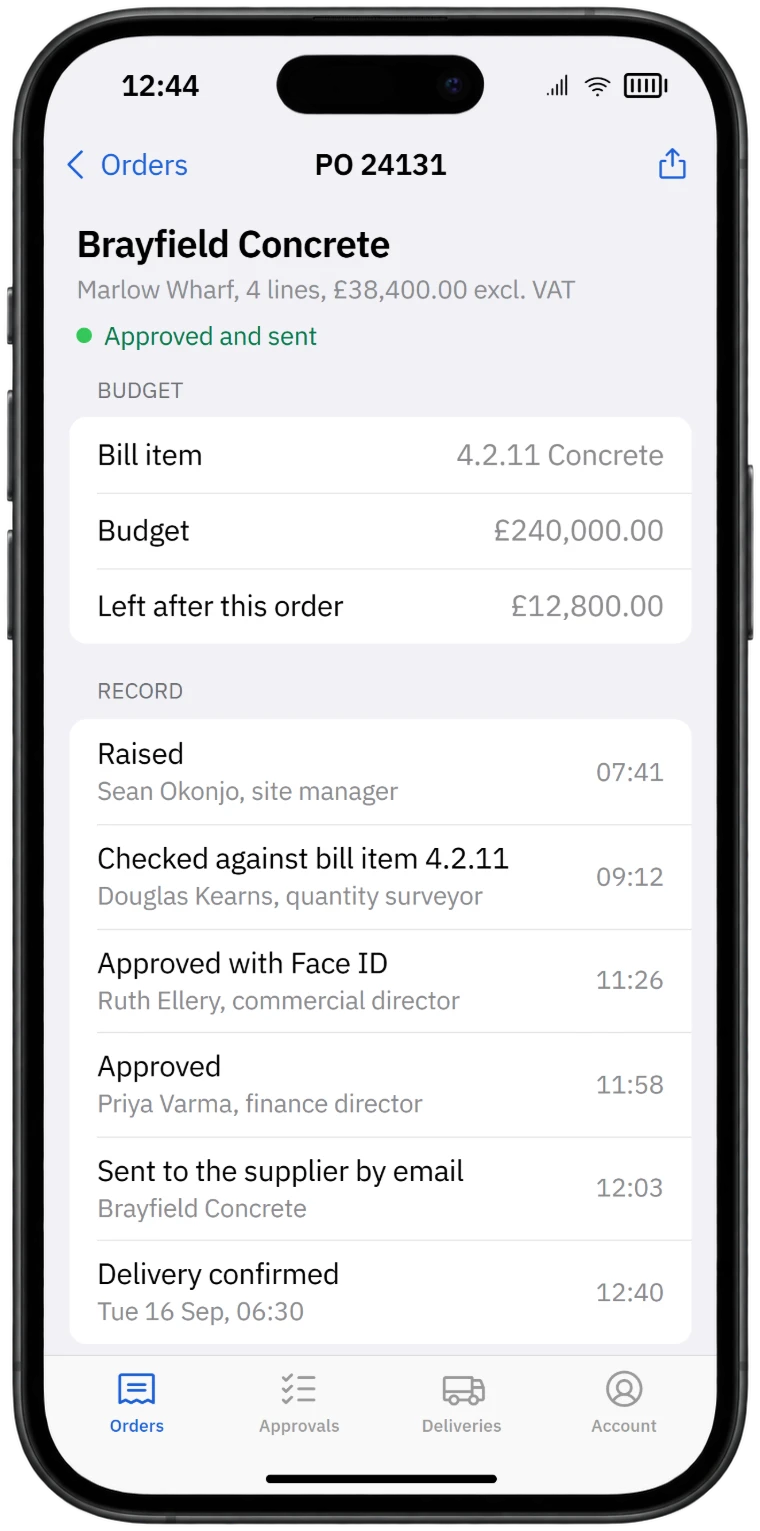
Every order carries who raised it, who approved it, when, and against which budget.
Afterwards
The finance director's summary was that they had not changed how they worked, they had just stopped losing track of it.
Built with
- TypeScript
- React
- Next.js
- PostgreSQL
- Prisma
- Auth.js
- DocuSign API
- Sage 50 integration
- Tailwind CSS
- Azure
Services used
More case studies

Is this your problem too?
If any of the above sounded familiar, describe your version of it. The first conversation is about whether software is the right answer at all.
From £10,000Most projects land between £15,000 and £55,000.